
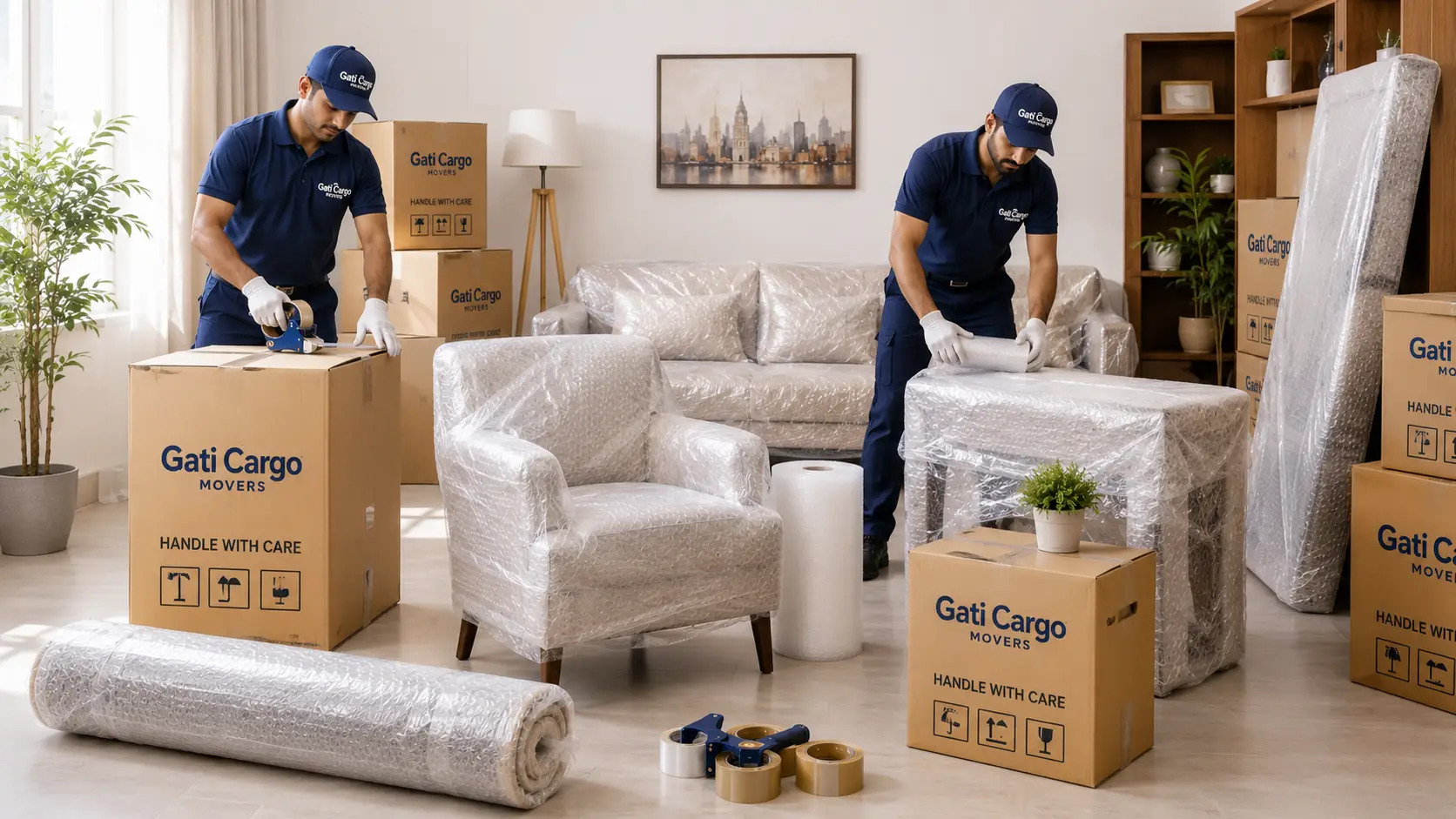
How Packers and Movers Do the Packing – Expert Packing Tips (2026)
Packing is the most critical phase of any relocation. When done correctly, your belongings arrive safely. When done poorly, even a short move can result in shattered glass, dented furniture, and damaged electronics. Unfortunately, most moving companies cut corners on packing because it's time-consuming and requires skilled labor. In this comprehensive guide, we'll expose common packing mistakes and teach you how professional packers (like Gati Cargo) protect your goods.
📦 The Shocking Truth: Most Packers Don't Know How to Pack
After 40 years in the industry, we've seen it all: boxes bulging with heavy books, televisions wrapped in a single bedsheet, dishes rattling loose inside oversized cartons. Why does this happen? Because many packers and movers hire daily-wage laborers with zero training. They rush through jobs, use whatever cardboard they find, and assume "it will be fine."
The result? Damage claims spike. Customers fight for compensation. And families start their new home with broken memories. Don't let this happen to you.
✅ Professional Packing Process – Step by Step
Here's how trained experts pack household goods correctly:
Step 1: Material Selection – Quality Matters
Professional movers use specific materials for different items:
- Double-walled corrugated boxes: 3-ply or 5-ply for heavy items (books, tools)
- Bubble wrap (3/8" or 1/2" bubbles): For glass, ceramics, electronics
- Corrugated rolls: Layered between dishes and fragile items
- Wooden crates: Custom-built for bikes, TVs, marble tabletops, and pianos
- Stretch wrap: To secure furniture drawers and doors
- Corner protectors: Cardboard or foam edges for furniture
- Furniture blankets (quilted pads): For sofas, mattresses, and wooden surfaces
Step 2: Item-Specific Packing Techniques
Dishes & Glassware: Each plate is wrapped individually in bubble wrap, then stacked vertically (not flat) inside a dish box with corrugated dividers. Gaps filled with crumpled paper.
Electronics (TV, Monitor, Computer): Original box is best. If not available, wrap in anti-static bubble wrap, place in a box with 3 inches of padding on all sides. For large TVs (55″+), professional movers use custom wooden crates.
Mirrors & Framed Art: Apply masking tape in an "X" across glass to prevent shattering. Wrap with bubble wrap, then corrugated sheet, then cardboard corners. Place in a mirror box (long, flat carton) and label "FRAGILE – GLASS".
Furniture: Drawers are NOT packed with items inside (this overweights them). Instead, drawers are emptied, secured with stretch wrap, and furniture is covered with quilted pads and shrink wrap.
Bikes & Vehicles: Handlebars turned sideways, pedals removed or protected, tyres deflated slightly. Then packed in custom wooden crates with corrugated roll cushioning.
Step 3: Box Sealing & Labeling
Professional movers use high-quality packing tape (not masking tape). Each box is sealed on the top and bottom seams. Then labeled with:
- Room destination (e.g., "Master Bedroom")
- Contents summary (e.g., "Kitchen – Glass & Dishes")
- Handling instructions (e.g., "FRAGILE", "THIS SIDE UP", "HEAVY")
- Box number (for inventory tracking)
🚫 7 Packing Mistakes Amateur Movers Make
A standard moving box should not exceed 30 kg. Heavy boxes crush lighter ones and injure movers' backs. Books should go in small boxes, not large ones.
Two inches of padding on all sides is mandatory for fragile items. Most amateurs use a single layer of newspaper — that's why dishes arrive shattered.
Heavy items (books, tools) belong in separate small boxes. Light items (linens, pillows) can go in large boxes. Mixing them damages the light items.
Empty space allows items to shift during transport. Fill gaps with crumpled paper, packing peanuts, or clothing.
Bubble wrap alone is insufficient for long-distance moves of TVs, marble, or pianos. Wooden crates are non-negotiable for high-value items.
"Kitchen" is not enough. Write "Kitchen – Fragile – Glasses" so handlers know to treat it gently.
Flammables (paint, petrol, gas cylinders), perishable food, and plants cannot be moved. Amateurs often pack them, leading to legal issues.
🧾 Professional Packing Materials Checklist
- ☐ Small boxes (1.5 cu ft) – for books, tools, heavy items
- ☐ Medium boxes (3.0 cu ft) – for kitchenware, electronics
- ☐ Large boxes (4.5 cu ft) – for linens, pillows, lampshades
- ☐ Dish barrel boxes (with dividers)
- ☐ Mirror / picture boxes (flat)
- ☐ Wardrobe boxes (with hanging rod)
- ☐ Bubble wrap (various bubble sizes)
- ☐ Corrugated rolls / sheets
- ☐ Packing paper (unprinted, acid-free)
- ☐ Foam corner protectors
- ☐ Furniture blankets (moving pads)
- ☐ Stretch wrap (18-inch wide)
- ☐ Packing tape (with dispenser)
- ☐ Permanent markers (for labeling)
- ☐ "Fragile" stickers
- ☐ Custom wooden crates (for TVs, bikes, marble)
⏱️ Time Required for Professional Packing
Professional packing is time-intensive. Here's what to expect:
| House Size | Packing Time (2 professionals) | Materials Cost (approx.) |
|---|---|---|
| 1BHK | 4-5 hours | ₹2,000 – ₹4,000 |
| 2BHK | 6-8 hours | ₹4,000 – ₹7,000 |
| 3BHK | 8-10 hours | ₹6,000 – ₹10,000 |
| 4BHK / Villa | 12-16 hours | ₹10,000 – ₹18,000 |